
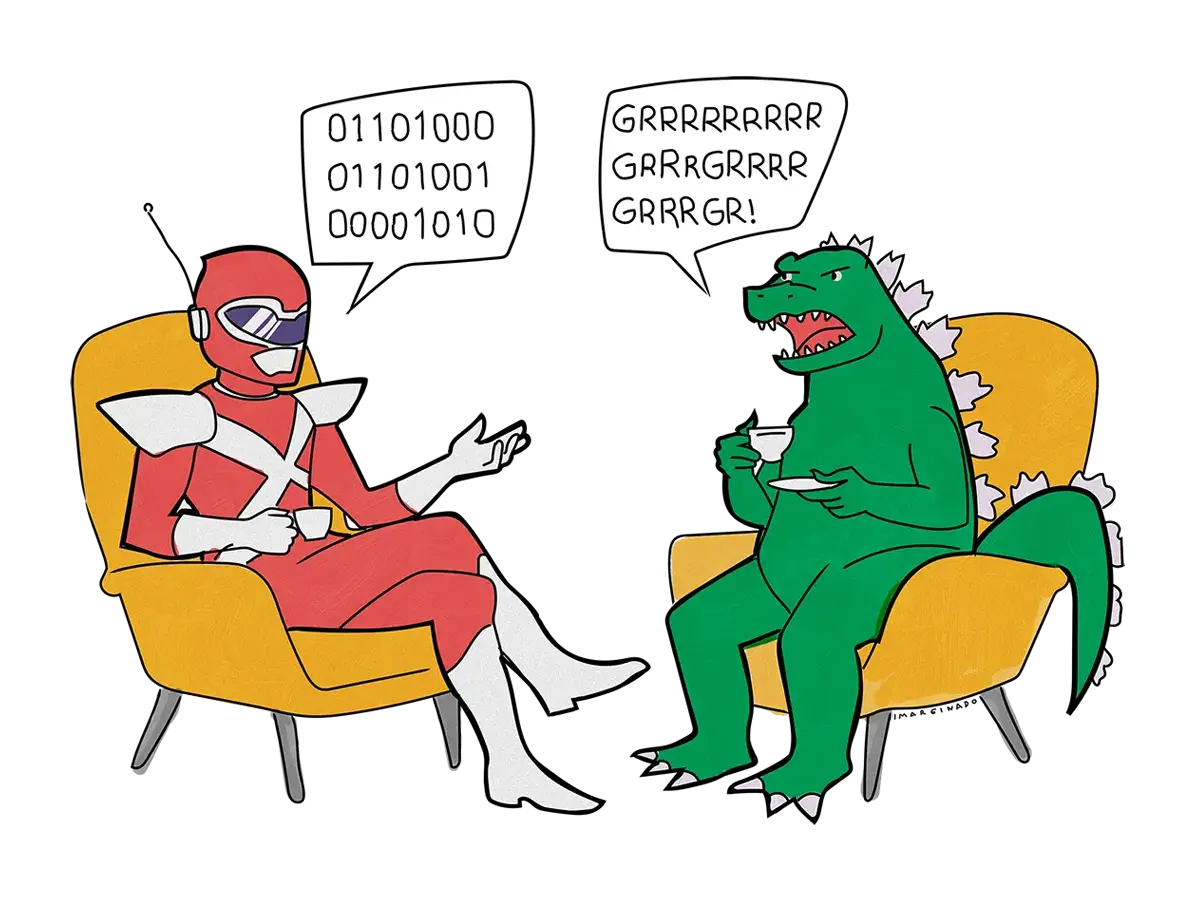
Trust, translation, and why culture is the real challenge in entertainment tech
The generational gap in entertainment tech is no longer a theory.
We’ve seen it, talked about it, and most brands have already accepted it.
We know habits changed.
We know discovery happens online.
We know younger generations research differently and decide earlier.
The real question now isn’t what tools to use.
It’s this: how do you translate an industry built on human trust into digital spaces without breaking its culture?
This article builds on a previous reflection about how younger generations discover, evaluate, and engage with entertainment technology today.
If you haven’t read it yet, you can start here→ Digital Strategy for Entertainment Tech: How to Stay Relevant in 2026
An industry built on human trust
Entertainment tech has always been a deeply human industry.
It runs on experience earned under pressure, trust built over long days, and reputations that are acknowledged rather than claimed.
For decades, this culture didn’t need to explain itself.
You learned by being there.
You trusted people because you saw them work.
This way of operating shaped incredibly solid professionals. It also shaped a very specific way of communicating: understated, practical, and deeply allergic to hype.
A new generation, different habits
When everything moved online — too fast— the industry didn’t suddenly become digital-native.
It was pushed there.
Social platforms, content strategies, AI tools, and automation arrived faster than the culture could metabolize them – and Covid19 was a catalyst.
Brands showed up online because they had to, not because those spaces felt natural or reflected how the industry talks to itself. The result is something many people sense:
A lot of digital presence that feels technically correct, but culturally off — and often detached from its human value.
Now, a new generation of designers, programmers, operators, and educators is entering the industry with different habits. They grew up in a world where information is always available, authority is constantly questioned, and no single voice holds the absolute truth.
So they move carefully. They cross-check. They look for signals before engaging.
Where validation really happens today
One of the biggest shifts brands are still processing is where validation happens now.
It doesn’t necessarily start at a booth or a demo. It often starts earlier and quietly, in places like:
- forums
- Discord servers
- closed groups
- Reddit threads
- long comment sections
- shared links and saved posts
- and, of course, real-world conversations
Most of this happens without announcements. People read, compare experiences, look for patterns, and decide long before reaching out.
From a brand perspective, this can feel invisible. But it’s not absence.
It’s silent filtering.
AI didn’t change decisions. It changed the surface.
AI made it easier to compare options, understand features, get quick answers, and narrow down choices.
But when it’s time to commit — when gear has to work on a real show, under real pressure, in real conditions — the decision still hinges on validation and trust.
AI gives answers.
Humans reduce risk.
That hasn’t changed.
Deep expertise, low visibility
Here’s where entertainment tech differs from many other industries.
This is a culture that values modesty, experience over noise, and with an emphasis on : letting the work speak for itself. Off course you can see all kinds of characters, the not-so-humble ones too. But the relevant part is this: people used to have room to be themselves and let the work speak for itself.
When the online world entered the picture, it created a paradox:
the most experienced voices often stay in private or technical spaces, while the most visible voices tend to be younger, louder, and more public.
This isn’t a criticism of either side. It’s a structural tension.
Silence used to signal credibility. But online silence often looks like absence. And for newcomers trying to understand who to trust, that gap matters.
Many brands do have content: tutorials, demos, recordings, long-form explanations. But much of it was created for a different moment in time, with longer attention spans and slower discovery paths.
Distributors, in particular, often rely on manufacturer content, reposted material, or generic social posts.
The issue isn’t effort.
It’s misalignment.
Depth exists — but it’s not always accessible.
UGC isn’t about hype. It’s about context.
User-generated content is often misunderstood as flashy clips, big shows, or surface-level promotion.
In entertainment tech, its real value lies elsewhere.
The content that actually builds trust explains why choices were made, shows constraints and compromises, talks about what didn’t work, and shares process rather than ego.
That kind of content already exists, often in forums, group discussions, or private exchanges.
The opportunity for brands isn’t to make it “cooler”.
It’s to translate depth into formats people can actually consume.
Why trade shows still matter — just differently
Trade shows like ISE didn’t lose relevance.
Their role evolved.
In a moment flooded with AI promises, ISE felt like a collective reminder: trust still happens face to face.
Not because technology failed — but because credibility can’t be generated on demand.
People still go to discover, but mainly to confirm: to put faces to names, validate assumptions, ask final questions, and sense whether the people behind a brand really know their stuff.
They go to catch up with old friends, to meet the people who once helped them online, to understand where each brand stands and what comes next — to share a beer and debate ideas until voices (and beer) run out.
Digital presence doesn’t replace trade shows.
It prepares them.
And just like the industry itself, formats will keep evolving.
Closing thoughts: the challenge ahead
Entertainment tech is a demanding industry. People don’t respond easily to brands.They respond to people they trust.
The challenge isn’t choosing between AI, UGC, trade shows, or experts. It’s learning how to connect them into a system that respects the culture of the industry while meeting the behavior of the next generation. Because credibility doesn’t travel the same way it always did.
In one word, the challenge is translation — between generations, formats, and worlds.
The companies that figure this out won’t just stay relevant.
They’ll make it easier for the next generation to stay, learn, and belong.
Open to conversation
This article is part of an ongoing research based on conversations with people across the industry — from technical roles to sales, marketing, and leadership.
If this resonates and you’d like to continue the conversation in a short, informal online chat, feel free to reach out.
